คู่มือภาคสนามของร่างกายA field guide to the body
อินซูลินสัญญาณ "อาหารมาแล้ว" ของร่างกาย Insulinthe body's "food has arrived" signal
อินซูลินไม่ใช่ศัตรูที่ต้องกดให้เป็นศูนย์ มันคือสัญญาณที่บอกตับ กล้ามเนื้อ และเนื้อเยื่อไขมันว่าอาหารมาถึงแล้ว เมื่อสัญญาณลดลง เนื้อเยื่อเหล่านั้นจะเปลี่ยนไปใช้พลังงานที่สะสมไว้ ปัญหาเกิดเมื่อสัญญาณนี้ถูกได้ยินไม่ชัด ส่งไม่พอ หรือต้องตะโกนตลอดเวลา
Insulin is not an enemy to push to zero. It tells your liver, muscle and fat that food has arrived, and when it falls they switch to stored fuel. Problems start when the signal is heard poorly, sent too weakly, or has to shout all day.
เว็บไซต์นี้เพื่อการศึกษาเท่านั้น ไม่ได้วินิจฉัยโรค ไม่ได้ทำนายค่าน้ำตาลของคุณ และไม่ได้คำนวณยา กราฟทุกภาพที่มีป้าย "ภาพประกอบ" คือรูปทรงเพื่อการสอน ไม่ใช่ข้อมูลของใครคนใดคนหนึ่งThis site is for education. It does not diagnose, predict your readings or calculate medication. Every chart marked "illustrative" shows a teaching shape, not anyone's real data.
ทำไมร่างกายต้องมีอินซูลินWhy insulin exists
อินซูลินผลิตจาก เบต้าเซลล์ ในกลุ่มเซลล์เล็ก ๆ ของตับอ่อน (islets of Langerhans) ตับอ่อนปล่อยอินซูลินสองแบบ คือ อินซูลินพื้นฐาน (basal) ที่หยดออกมาตลอดวันแม้ไม่ได้กินอะไร และ อินซูลินหลังมื้ออาหาร ที่เพิ่มขึ้นเมื่ออาหารถูกดูดซึม ลำไส้ยังส่งฮอร์โมน อินครีติน (GLP-1 และ GIP) ไปบอกตับอ่อนล่วงหน้า น้ำตาลที่กินทางปากจึงกระตุ้นอินซูลินได้มากกว่าน้ำตาลปริมาณเท่ากันที่ฉีดเข้าเส้นเลือด
Insulin is made by beta cells in small clusters inside the pancreas (the islets of Langerhans). The pancreas releases it in two ways: a steady basal trickle all day, even when you are not eating, and a larger meal response as food is absorbed. The gut also sends incretin hormones (GLP-1 and GIP) to warn the pancreas early, so glucose taken by mouth triggers more insulin than the same glucose given into a vein.
งานของอินซูลินไม่ได้มีแค่ "พาน้ำตาลเข้าเซลล์" มันสั่งให้ตับหยุดปล่อยน้ำตาล สั่งให้เนื้อเยื่อไขมันหยุดปล่อยกรดไขมัน ยับยั้งการสร้างคีโตน ช่วยให้กล้ามเนื้อสร้างโปรตีน และดึงโพแทสเซียมเข้าเซลล์ ส่วน กลูคากอน จากเซลล์อัลฟ่าทำงานตรงข้าม คือบอกตับให้ปล่อยน้ำตาลออกมา
Its job is much wider than "letting sugar into cells". Insulin tells the liver to stop releasing glucose, tells fat tissue to stop releasing fatty acids, holds back ketone production, supports muscle protein building and moves potassium into cells. Glucagon, from neighbouring alpha cells, pushes the other way and tells the liver to release glucose.
ตับอ่อน: อวัยวะเดียว สองหน้าที่The pancreas: one organ, two jobs
แตะภาพเพื่อขยายTap the image to enlargeภาพ:Image: OpenStax, Anatomy and Physiology 2e, §17.9 The Endocrine Pancreas · CC BY 4.0 · [12]
เซลล์ไหนไม่ต้องใช้อินซูลินเพื่อรับน้ำตาลCells that take up glucose without insulin
- สมอง ใช้ตัวขนส่ง GLUT1 และ GLUT3 จึงรับน้ำตาลได้ต่อเนื่องBrain: uses GLUT1 and GLUT3 transporters, so supply is continuous.
- เม็ดเลือดแดง ใช้ GLUT1 และไม่มีไมโทคอนเดรียRed blood cells: GLUT1, and they have no mitochondria.
- ตับ น้ำตาลเข้าออกผ่าน GLUT2 ได้เอง แต่อินซูลินเป็นตัวกำหนดว่าจะเก็บหรือปล่อยLiver: glucose moves through GLUT2 freely; insulin decides whether it is stored or released.
- กล้ามเนื้อขณะออกกำลัง การหดตัวดัน GLUT4 ขึ้นผิวเซลล์ได้โดยไม่ต้องพึ่งอินซูลินWorking muscle: contraction moves GLUT4 to the surface without insulin.
เซลล์ที่ต้องพึ่งอินซูลินชัดเจนคือ กล้ามเนื้อขณะพัก และเนื้อเยื่อไขมัน (ผ่าน GLUT4)The clearly insulin-dependent ones are resting muscle and fat tissue (via GLUT4). [4]
อุปมา "ตำรวจในเมืองสงบ" ใช้ได้แค่ไหนThe "police in a peaceful city" analogy
คำถามคือ ถ้าเมืองสงบ (กินน้ำตาลน้อย) ยังต้องมีตำรวจ (อินซูลิน) ไหม คำตอบคือ ต้อง เพราะเมืองไม่เคยว่างจริง ตับผลิตน้ำตาลเองตลอดเวลา และไขมันก็พร้อมจะถูกปล่อยออกมา อินซูลินระดับต่ำ ๆ คือสิ่งที่คุมไม่ให้สองอย่างนี้ล้น คนที่ไม่มีอินซูลินเลย (เบาหวานชนิดที่ 1 ที่ไม่ได้รับอินซูลิน) จะเกิดน้ำตาลสูงและคีโตนสูงอันตราย แม้ไม่ได้กินน้ำตาลเลย
The question: if the city is quiet (little sugar eaten), do you still need police (insulin)? Yes, because the city is never empty. The liver makes glucose all the time and fat stores are always ready to release. A low level of insulin is what keeps both in check. People with no insulin at all (untreated type 1 diabetes) develop dangerous high glucose and ketoacidosis even when they eat no sugar.
ข้อจำกัดของอุปมา: อินซูลินไม่ได้ "ปราบ" อะไร มันเหมือนปุ่มหรี่ไฟที่ปรับหลายห้องพร้อมกัน แต่ละห้องไวต่อการหมุนไม่เท่ากัน ลองหมุนด้านล่าง
Where it breaks: insulin does not "fight" anything. It is closer to a dimmer that adjusts several rooms at once, and each room responds at a different setting. Try it below.
ปุ่มหรี่อินซูลิน: แต่ละเนื้อเยื่อตอบสนองที่ระดับต่างกันThe insulin dimmer: each tissue responds at a different level
ภาพประกอบIllustrativeร่างกายตอนอิ่ม ตอนอด และตอนออกแรงFed, fasted and moving
วงจรป้อนกลับ: อินซูลินกับกลูคากอนThe feedback loop: insulin and glucagon
เพิ่มเติม 1Note 1 · "กระตุ้นเซลล์ร่างกายให้รับน้ำตาล" ใช้ได้หลัก ๆ กับกล้ามเนื้อและเนื้อเยื่อไขมัน สมองและเม็ดเลือดแดงรับน้ำตาลได้เองโดยไม่ต้องพึ่งอินซูลิน (บท 1.2)"Triggers body cells to take up glucose" applies mainly to muscle and fat. Brain and red blood cells take up glucose without insulin (section 1.2).
เพิ่มเติม 2Note 2 · อินซูลินกับกลูคากอนไม่ได้สลับกันเปิดปิด ทั้งสองหลั่งอยู่ตลอดเวลา สิ่งที่เปลี่ยนคือสัดส่วนระหว่างกันInsulin and glucagon do not switch on and off in turn. Both are secreted all the time; what changes is the ratio between them.
เพิ่มเติม 3Note 3 · ตัวเลขบนเครื่องวัดเป็นตัวอย่าง ช่วง 70–100 mg/dL คือค่าขณะอดอาหารโดยประมาณ หลังอาหารน้ำตาลขึ้นสูงกว่านี้ชั่วคราวได้ตามปกติ และค่าต่ำในภาพ (50) ไม่ใช่เกณฑ์วินิจฉัย (ดูบท 4)The meter numbers are examples. 70–100 mg/dL is roughly the fasting range; after meals glucose normally rises above it for a while. The low example (50) is not a diagnostic threshold (see chapter 4).
ภาพ:Image: OpenStax, Anatomy and Physiology 2e, §17.9 The Endocrine Pancreas · CC BY 4.0 · [12]
อวัยวะจริงในภาพตำรา: แตะเพื่อดูบทบาทต่อน้ำตาลและอินซูลินReal organs from a textbook figure: tap to see each one's role in glucose and insulin
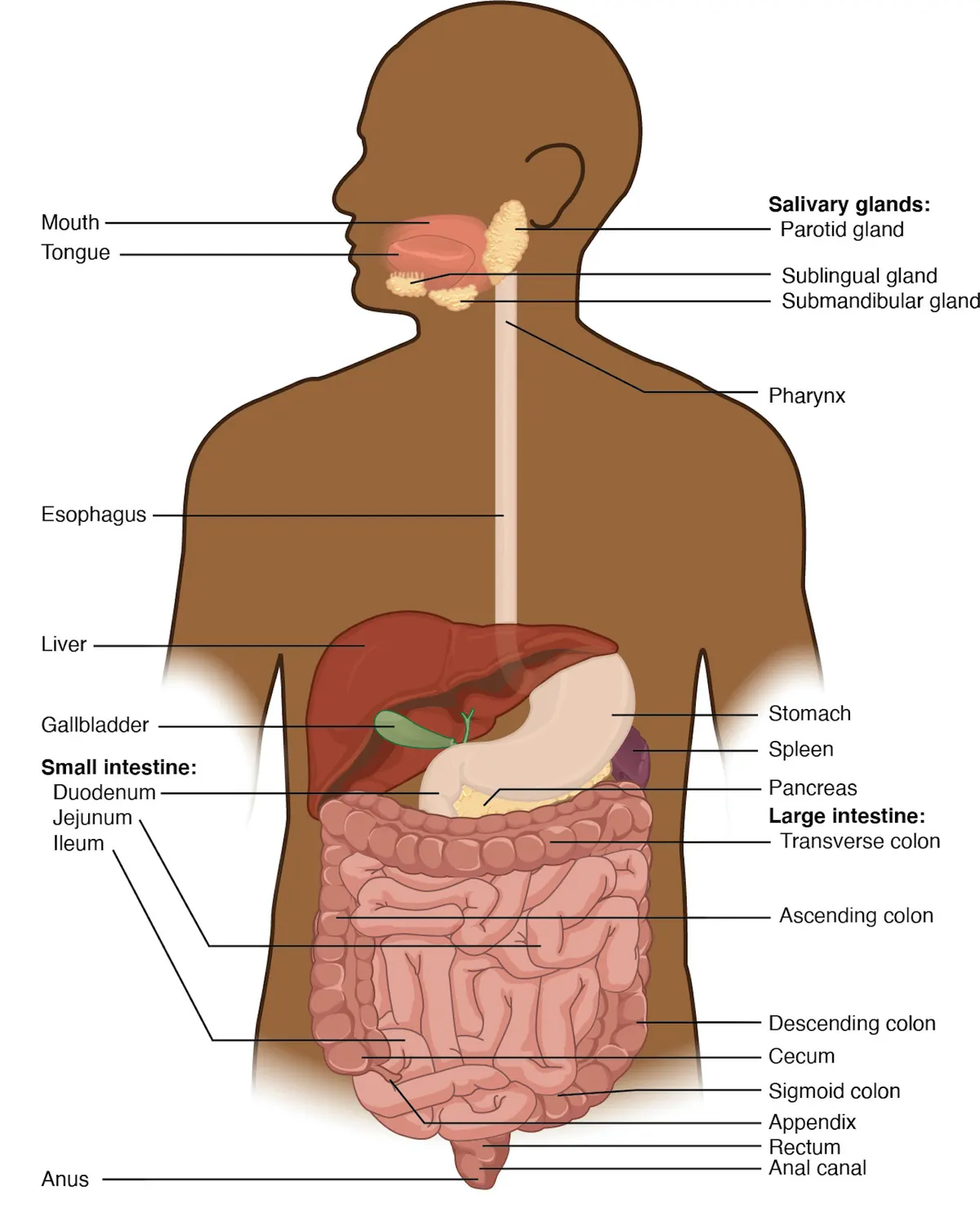
ภาพ:Image: OpenStax, Anatomy and Physiology 2e, §23.1 Overview of the Digestive System · CC BY 4.0 · [12]
เลือกสถานการณ์เพื่อดูว่าเชื้อเพลิงไหลไปทางไหน ลูกศรแต่ละสีคือสารที่เดินทางในเลือด
Pick a situation to see where fuel flows. Each arrow colour is something travelling in the blood.
เชื้อเพลิงไหลไปไหนในแต่ละสถานการณ์Where fuel flows in each situation
แตะอวัยวะเพื่อดูว่ามันทำอะไร · พื้นที่สีจางที่มีป้ายกลม (สมอง กล้ามเนื้อ ไขมัน) เป็นตำแหน่งที่คู่มือนี้เติมเอง ภาพต้นฉบับไม่ได้วาดไว้Tap an organ to see what it is doing · Tinted areas with round labels (brain, muscle, fat) are added by this guide; the original figure does not draw them
เส้นทางในเลือด (ตามเลขบนภาพ)Routes in the blood (numbers match the diagram)
สรุปทุกอวัยวะAll organs at a glance
ภาพตำรา: ภาวะอิ่มกับภาวะอด (พร้อมจุดที่ต้องแก้)The textbook view of fed and fasted states, with corrections
ก ข้อ 2 · ย่อเกินไปA, step 2 · oversimplified · "อินซูลินเพิ่มการรับน้ำตาลของเซลล์ทุกเซลล์" ที่จริงมีแค่กล้ามเนื้อและไขมันที่ต้องพึ่งอินซูลินในการรับน้ำตาล ตับรับน้ำตาลผ่าน GLUT2 ได้เอง อินซูลินกำหนดว่าตับจะเก็บหรือปล่อย"Insulin increases the uptake of glucose by all body cells." Only muscle and fat depend on insulin for uptake. The liver takes glucose in through GLUT2 on its own; insulin decides whether it stores or releases it.
ก ข้อ 3a · ผิดA, step 3a · incorrect · ภาพบอกว่าในภาวะอิ่มตับเปลี่ยนกรดอะมิโนเป็นคีโตน ที่จริงอินซูลินในภาวะอิ่ม ยับยั้ง การสร้างคีโตน คีโตนเพิ่มขึ้นตอนอดอาหารThe figure says the fed liver turns amino acids into ketone bodies. In fact fed-state insulin suppresses ketone production; ketones rise during fasting.
ข ข้อ 2 · ย่อเกินไปB, step 2 · oversimplified · "ตับอ่อนหยุดหลั่งอินซูลิน" ที่จริงอินซูลินลดลงสู่ระดับพื้นฐาน ไม่ได้เป็นศูนย์ อินซูลินระดับต่ำนี้ยังคุมการสลายไขมันและคีโตน (บท 1.4)"The pancreas stops releasing insulin." Insulin falls to basal levels, not to zero, and that low level still restrains fat release and ketones (section 1.4).
ข ข้อ 3b · ผิดB, step 3b · incorrect · ภาพบอกว่ากล้ามเนื้อปล่อยกลูโคสเข้ากระแสเลือด กล้ามเนื้อทำไม่ได้ เพราะไม่มีเอนไซม์ glucose-6-phosphatase ไกลโคเจนในกล้ามเนื้อใช้เป็นพลังงานของกล้ามเนื้อเอง กล้ามเนื้อส่งแลกเตตและกรดอะมิโน (เช่น อะลานีน) ไปให้ตับสร้างกลูโคสแทนThe figure says muscle releases glucose into the blood. It cannot, because muscle lacks the enzyme glucose-6-phosphatase. Muscle glycogen fuels the muscle itself. Muscle sends lactate and amino acids (such as alanine) to the liver, which makes the glucose.
ภาพ:Images: OpenStax, Anatomy and Physiology 2e, §24.5 Metabolic States of the Body · CC BY 4.0 · [12] · การแก้ไข:Corrections: [4]
ภาวะดื้ออินซูลิน: ไม่ใช่บันไดเส้นเดียวInsulin resistance is not one staircase
ดื้ออินซูลิน หมายถึงเนื้อเยื่อต้องการอินซูลินมากขึ้นเพื่อให้ได้ผลเท่าเดิม มันไม่ได้เกิดพร้อมกันทุกอวัยวะ ตับอาจดื้อ (ยังปล่อยน้ำตาลแม้อินซูลินสูง) ขณะที่กล้ามเนื้อยังดีอยู่ หรือกลับกัน ในช่วงแรกเบต้าเซลล์มักชดเชยด้วยการหลั่งอินซูลินมากขึ้น น้ำตาลจึงยังปกติ เบาหวานชนิดที่ 2 เกิดเมื่อการชดเชยนั้นไม่พอ ซึ่งขึ้นกับพันธุกรรมของเบต้าเซลล์อย่างมาก คนจำนวนมากที่ดื้ออินซูลินไม่เคยเป็นเบาหวาน
Insulin resistance means tissues need more insulin to get the same effect. It does not happen evenly. The liver can be resistant (still releasing glucose despite high insulin) while muscle is fine, or the reverse. At first beta cells usually compensate by secreting more, so glucose stays normal. Type 2 diabetes appears when that compensation falls short, which depends heavily on beta-cell genetics. Many people with insulin resistance never develop diabetes.
ไขมันพอกตับเป็นสาเหตุหรือผล? ทั้งสองทาง ไขมันที่สะสมในเซลล์ตับ (โดยเฉพาะ diacylglycerol) รบกวนสัญญาณอินซูลินในตับ ขณะเดียวกันอินซูลินสูงก็กระตุ้นให้ตับสร้างไขมันเพิ่ม กลายเป็นวงจรป้อนกลับ หลักฐานที่ชัดที่สุดว่าวงจรนี้ย้อนได้คือการทดลอง DiRECT ในผู้ป่วยเบาหวานชนิดที่ 2 การลดน้ำหนักทำให้ไขมันในตับและตับอ่อนลดลง และ 46% เข้าสู่ภาวะสงบของโรคที่ 12 เดือน เทียบกับ 4% ในกลุ่มควบคุม
Is liver fat a cause or a result? Both. Fat stored inside liver cells (especially diacylglycerol) interferes with insulin signalling in the liver, while high insulin pushes the liver to make more fat. That is a feedback loop. The clearest evidence that it can reverse is the DiRECT trial in type 2 diabetes: weight loss reduced liver and pancreas fat, and 46% reached remission at 12 months versus 4% of controls.
วงจรไขมันในตับกับอินซูลินThe liver-fat and insulin loop
- ไขมันสะสมในเซลล์ตับ (diacylglycerol) ซึ่งมักมาจากพลังงานเกินต่อเนื่องFat builds up inside liver cells (diacylglycerol), usually from an ongoing energy surplus
- ตับตอบสนองอินซูลินลดลง ยังปล่อยน้ำตาลต่อแม้อินซูลินสูงThe liver responds less to insulin and keeps releasing glucose despite high insulin
- น้ำตาลสูงขึ้น ตับอ่อนหลั่งอินซูลินเพิ่มเพื่อชดเชย (กล้ามเนื้อที่ดื้อหรือการนั่งนานยิ่งเพิ่มภาระ)Glucose rises and the pancreas secretes more insulin to compensate (resistant muscle or long sitting add to the load)
- อินซูลินสูงกระตุ้นตับให้สร้างไขมันมากขึ้น วนกลับไปข้อ 1High insulin drives the liver to make more fat, which feeds back to step 1
- ทางออกที่มีหลักฐาน: ลดน้ำหนัก → ไขมันในตับลด วงจรคลายตัวได้ [6]Evidence-backed exit: weight loss → less liver fat → the loop can unwind [6]
| ภาวะState | เกิดอะไรขึ้นWhat is happening | น้ำตาลGlucose | อินซูลินInsulin | หมายเหตุNote |
|---|---|---|---|---|
| ตอบสนองหลังอาหารปกติNormal meal response | อินซูลินขึ้นแล้วลงภายในไม่กี่ชั่วโมงInsulin rises then returns within a few hours | ขึ้นเล็กน้อยแล้วกลับBrief rise, returns | ขึ้นชั่วคราวTemporary rise | เป็นเรื่องที่ควรเกิด ไม่ใช่ความผิดปกติThis is supposed to happen |
| อินซูลินสูงเพื่อชดเชยCompensatory hyperinsulinaemia | เนื้อเยื่อดื้อ ตับอ่อนหลั่งมากขึ้นเพื่อรักษาน้ำตาลTissues resist; pancreas secretes more to hold glucose steady | ปกติNormal | สูงกว่าปกติ ทั้งตอนอดและหลังอาหารRaised, fasting and after meals | ไม่มีเกณฑ์วินิจฉัยมาตรฐานNo standard diagnostic cut-off |
| เบต้าเซลล์ทำงานบกพร่องBeta-cell dysfunction | การหลั่งช่วงแรกหลังอาหารลดลง ชดเชยไม่ทันEarly meal-time secretion falls; compensation lags | เริ่มสูงขึ้นStarts to rise | อาจยังสูง แต่ไม่พอMay still be high, but not enough | พันธุกรรมมีบทบาทมากGenetics matter a lot |
| ภาวะก่อนเบาหวานPrediabetes | น้ำตาลสูงกว่าปกติแต่ยังไม่ถึงเกณฑ์เบาหวานGlucose above normal, below diabetes range | FPG 100–125 · A1C 5.7–6.4% | แตกต่างกันไปVariable | หลายคนกลับเป็นปกติได้Many return to normal |
| เบาหวานชนิดที่ 2Type 2 diabetes | ดื้ออินซูลินร่วมกับเบต้าเซลล์ชดเชยไม่พอResistance plus insufficient beta-cell compensation | FPG ≥126 · A1C ≥6.5% | สูง ปกติ หรือต่ำ ขึ้นกับระยะHigh, normal or low depending on course | ต้องยืนยันซ้ำNeeds confirmation |
| เบาหวานชนิดที่ 1Type 1 diabetes | ภูมิคุ้มกันทำลายเบต้าเซลล์ ขาดอินซูลินAutoimmune loss of beta cells; insulin deficiency | สูงHigh | ต่ำมากVery low | ไม่ได้เกิดจากน้ำตาลต่ำ หรือจากการกินหวานNot caused by low sugar or by eating sweets |
FPG = fasting plasma glucose (mg/dL). [1]
ปัจจัยที่ผลักให้ดื้ออินซูลินWhat pushes toward resistance
- พลังงานเกินสะสมเป็นไขมันในตับและรอบอวัยวะภายในEnergy surplus stored as liver and visceral fat
- กล้ามเนื้อน้อย และนั่งนานLow muscle mass and long sitting
- นอนน้อย หรือนอนผิดเวลา (กะดึก)Short or mistimed sleep (shift work)
- ความเครียดเรื้อรัง คอร์ติซอล ยาบางชนิด (สเตียรอยด์)Chronic stress, cortisol, some drugs (steroids)
- พันธุกรรม คนเอเชียมักเกิดที่ BMI ต่ำกว่าคนตะวันตกGenetics; Asian adults often develop it at lower BMI
ฟรุกโตสต่างจากกลูโคสอย่างไรHow fructose differs from glucose
ฟรุกโตสถูกตับดักไว้เกือบทั้งหมด จึงทำให้น้ำตาลในเลือดและอินซูลินขึ้นน้อยกว่ากลูโคสมาก แต่ไม่ได้แปลว่าไม่มีผล เมื่อกินฟรุกโตสปริมาณมากในรูปเครื่องดื่มขณะที่พลังงานเกิน ตับจะเปลี่ยนส่วนหนึ่งเป็นไขมัน ผลไม้ทั้งลูกมีฟรุกโตสน้อยกว่าเครื่องดื่มหวานมาก และมีใยอาหารชะลอการดูดซึม
The liver captures most fructose, so it raises blood glucose and insulin far less than glucose does. That does not make it neutral. Large amounts in drinks, during an energy surplus, are partly turned into fat by the liver. Whole fruit carries much less fructose than a sweet drink, plus fibre that slows absorption.
อาการไม่ใช่ค่าน้ำตาลA symptom is not a glucose reading
ใจสั่น เหงื่อออก มือสั่น หิวจัด สมองตื้อ หรือรู้สึกหมดแรงหลังอาหาร อาจเกิดจากน้ำตาลต่ำ แต่ก็เกิดจากสาเหตุอื่นได้มากมาย ร่างกายของคนที่ไม่เป็นเบาหวานควบคุมน้ำตาลได้แน่นมาก การที่น้ำตาลต่ำจริงจนเป็นโรคในคนกลุ่มนี้ถือว่า พบไม่บ่อย แนวทางของ Endocrine Society จึงให้ประเมินภาวะน้ำตาลต่ำเฉพาะเมื่อครบ Whipple's triad
Shakiness, sweating, pounding heart, sudden hunger, brain fog or a post-meal slump can come from low glucose, but they have many other causes. People without diabetes regulate glucose tightly, and a true hypoglycaemic disorder in this group is uncommon. The Endocrine Society guideline therefore evaluates hypoglycaemia only when Whipple's triad is documented.
[2]
ตัวเลขเดียวกัน ความหมายต่างกันตามบริบทThe same number means different things in different contexts
สาเหตุอื่นที่ทำให้รู้สึกเหมือนน้ำตาลตกOther things that feel like a sugar crash
| สาเหตุCause | ลักษณะที่อาจพบWhat it can feel like | สิ่งที่ช่วยแยกWhat helps tell it apart |
|---|---|---|
| หายใจเร็วเกิน / ตื่นตระหนกOver-breathing / panic response | ใจเต้นแรง หายใจไม่อิ่ม ชาปลายนิ้ว รู้สึกหายนะPounding heart, air hunger, tingling fingers, sense of doom | น้ำตาลปกติขณะมีอาการ ดีขึ้นเมื่อหายใจช้าลงNormal glucose during the episode; eases with slower breathing |
| ขาดน้ำ / เกลือแร่Dehydration / low salt intake | ปากแห้ง เหนื่อย หน้ามืดเมื่อลุกยืนDry mouth, fatigue, light-headed on standing | ปัสสาวะสีเข้ม ชีพจรเร็วเมื่อยืนDark urine, faster pulse on standing |
| นอนไม่พอ / จังหวะชีวภาพSleep loss / circadian dip | ง่วงหลังเที่ยงแม้ไม่ได้กินEarly-afternoon slump even without lunch | เกิดตามเวลา มากกว่าตามมื้ออาหารTracks the clock more than the meal |
| คาเฟอีนCaffeine | ใจสั่น กระสับกระส่าย นอนไม่หลับPalpitations, jitteriness, poor sleep | สัมพันธ์กับชา กาแฟ ช็อกโกแลตFollows tea, coffee, chocolate |
| มื้อใหญ่ / อาหารมันLarge or fatty meal | อิ่มแน่น ง่วง อาหารค้างในท้องFullness, drowsiness, food "sitting" in the stomach | ขึ้นกับขนาดมื้อมากกว่าน้ำตาลScales with meal size more than sugar |
| หัวใจเต้นผิดจังหวะ ไทรอยด์ โลหิตจางHeart rhythm, thyroid, anaemia | ใจสั่นเป็นพัก ๆ เหนื่อยง่ายEpisodic palpitations, easy fatigue | ต้องตรวจโดยแพทย์ (คลื่นหัวใจ เลือด)Needs clinical tests (ECG, blood tests) |
เมื่อไรควรไปพบแพทย์ทันทีWhen to get urgent care
เจ็บหน้าอก เป็นลม ใจสั่นร่วมกับหายใจลำบากที่ไม่ดีขึ้น สับสน พูดไม่ชัด ชัก หรือวัดน้ำตาลได้ต่ำร่วมกับอาการที่ไม่ดีขึ้นหลังกินน้ำตาล ในประเทศไทยโทร 1669
Chest pain, fainting, palpitations with breathlessness that do not settle, confusion, slurred speech, seizure, or a low reading with symptoms that do not improve after taking sugar. In Thailand call 1669.
การตรวจแต่ละแบบตอบคำถามคนละข้อEach test answers a different question
ก่อนตรวจ ให้ถามก่อนว่าอยากรู้อะไร "ฉันเป็นเบาหวานหรือเปล่า" กับ "อาการหลังอาหารของฉันเกิดจากน้ำตาลต่ำไหม" ใช้การตรวจคนละแบบ และ OGTT ที่ใช้คัดกรองเบาหวาน ไม่ใช่ การตรวจที่เหมาะกับคำถามที่สอง เพราะคนปกติจำนวนมากก็มีน้ำตาลต่ำลงหลังดื่มกลูโคส 75 กรัม
Start with the question. "Do I have diabetes?" and "Are my post-meal symptoms caused by low glucose?" need different tests. The diabetes OGTT is not the right tool for the second question, because many healthy people dip after a 75 g glucose drink.
| การตรวจTest | ตอบคำถามอะไรQuestion it can answer | การเตรียมตัว / บริบทPreparation / context | ข้อจำกัดหลักMajor limitations | เปลี่ยนการดูแลเมื่อไรWhen it might change care |
|---|---|---|---|---|
| น้ำตาลพลาสมาขณะอดอาหาร (FPG)Fasting plasma glucose | คัดกรอง/วินิจฉัยเบาหวานและก่อนเบาหวานScreening/diagnosis of diabetes and prediabetes | งดอาหาร ≥8 ชม. เจาะเลือดที่แล็บNo calories ≥8 h; lab venous sample | ผันแปรวันต่อวัน เครียด ป่วย นอนน้อย มีผลDay-to-day variation; illness, stress, sleep affect it | ≥126 mg/dL สองครั้ง หรือร่วมกับการตรวจอื่น≥126 mg/dL confirmed by repeat or a second test |
| HbA1c | ค่าเฉลี่ยน้ำตาลประมาณ 2–3 เดือนApproximate average glucose over 2–3 months | ไม่ต้องงดอาหารNo fasting needed | คลาดเคลื่อนได้ในธาลัสซีเมีย/HbE (พบบ่อยในไทย) โลหิตจาง ไตเสื่อม ตั้งครรภ์ เสียเลือดCan mislead with thalassaemia/HbE (common in Thailand), anaemia, kidney disease, pregnancy, blood loss | ≥6.5% ยืนยันด้วยการตรวจซ้ำ ใช้วิธีที่ได้มาตรฐาน NGSP≥6.5% confirmed; use an NGSP-certified method |
| OGTT 75 กรัม (2 ชม.)75 g OGTT (2-hour) | วินิจฉัยเบาหวาน รวมถึงที่ FPG ยังปกติDiabetes diagnosis, including when fasting is still normal | กินคาร์บปกติ ≥150 ก./วัน 3 วันก่อน ห้ามอดหรือคีโตก่อนตรวจEat ≥150 g carbs/day for 3 days before; not after fasting or keto | ไม่ใช่การตรวจหาน้ำตาลต่ำหลังอาหาร คนปกติก็ต่ำลงได้Not a test for post-meal lows; healthy people dip too | 2 ชม. ≥200 = เบาหวาน, 140–199 = ก่อนเบาหวาน2-h ≥200 diabetes; 140–199 prediabetes |
| น้ำตาลแบบสุ่มRandom glucose | ใช้เมื่อมีอาการน้ำตาลสูงชัดเจนOnly with classic high-glucose symptoms | ไม่ต้องเตรียมAny time | ใช้วินิจฉัยเดี่ยว ๆ ไม่ได้ถ้าไม่มีอาการNot diagnostic alone without symptoms | ≥200 ร่วมกับปัสสาวะบ่อย กระหายน้ำ น้ำหนักลด≥200 with thirst, frequent urination, weight loss |
| อินซูลินขณะอดอาหาร / HOMA-IRFasting insulin / HOMA-IR | ประมาณการดื้ออินซูลินในงานวิจัยResearch estimate of insulin resistance | งดอาหารFasting | ชุดตรวจแต่ละแล็บให้ค่าต่างกัน ไม่มีเกณฑ์มาตรฐานสากลAssays differ between labs; no universal cut-off | ไม่ค่อยเปลี่ยนการรักษาในคนทั่วไปRarely changes routine care |
| C-peptide | ตับอ่อนผลิตอินซูลินเองได้แค่ไหนHow much insulin your own pancreas makes | ตีความคู่กับค่าน้ำตาล ณ เวลาเดียวกันInterpreted alongside a simultaneous glucose | มีความหมายเฉพาะบริบทOnly meaningful in context | แยกชนิดเบาหวาน หรือตรวจน้ำตาลต่ำภายใต้แพทย์Classifying diabetes; supervised hypoglycaemia work-up |
| เครื่องเจาะปลายนิ้วFinger-stick meter | ตรวจเร็ว ณ ขณะนั้นQuick reading in the moment | ล้างมือ เช็ดให้แห้ง แถบตรวจไม่หมดอายุWash and dry hands; in-date strips | มาตรฐาน ISO ยอมให้คลาด ±15 mg/dL เมื่อค่าต่ำกว่า 100ISO standard allows ±15 mg/dL below 100 | ไม่ใช้ยืนยันโรคน้ำตาลต่ำหรือเบาหวานNot for confirming either diagnosis |
| CGM | แนวโน้มน้ำตาลในของเหลวระหว่างเซลล์ทั้งวันAll-day trend in interstitial fluid | ติดเซนเซอร์ 10–15 วันSensor worn 10–15 days | ช้ากว่าเลือด 5–15 นาที ค่าต่ำหลอกเมื่อนอนทับเซนเซอร์ ไม่วัดอินซูลินLags blood by 5–15 min; false lows when lying on it; does not measure insulin | ADA ไม่รับรองการใช้ CGM เดี่ยว ๆ คัดกรองหรือวินิจฉัยADA does not support CGM alone for screening or diagnosis |
ถ้าสงสัยน้ำตาลต่ำหลังอาหารIf post-meal lows are suspected
แนวทางคือให้แพทย์ตรวจ ระหว่างที่มีอาการตามธรรมชาติ หรือทดสอบด้วย มื้ออาหารผสม (mixed-meal test) ภายใต้การดูแล โดยเจาะน้ำตาล อินซูลิน C-peptide และ proinsulin พร้อมกัน ไม่ควรกระตุ้นอาการเองด้วยการกินน้ำตาลจำนวนมากหรืออดอาหารนานที่บ้าน
The guideline approach is clinical testing during a naturally occurring episode, or a supervised mixed-meal test with glucose, insulin, C-peptide and proinsulin drawn together. Do not try to provoke symptoms at home with a large sugar load or a long fast.
[2]
แปลงหน่วย mg/dL ↔ mmol/LConvert mg/dL ↔ mmol/L
ใช้แปลงหน่วยเท่านั้น ไม่ได้แปลผล โรงพยาบาลในไทยส่วนใหญ่ใช้ mg/dLUnit conversion only, not interpretation. Most Thai hospitals report mg/dL.
อาหารคือมื้อ ไม่ใช่สารอาหารเดี่ยวFood arrives as meals, not single nutrients
เลือกมื้ออาหารเพื่อดูรูปทรงทั่วไปของน้ำตาลและอินซูลินหลังกิน เส้นประสีเทาคือมื้อที่เลือกไว้ก่อนหน้า ใช้เปรียบเทียบได้
Pick a meal to see the typical shape of glucose and insulin afterwards. The grey dashed line is the previous meal you picked, for comparison.
รูปทรงหลังอาหาร 3 ชั่วโมงThree hours after eating
ภาพประกอบ ไม่ใช่การทำนายIllustrative, not a prediction| สารอาหารNutrient | ผลต่อน้ำตาลในเลือดEffect on blood glucose | ผลต่ออินซูลินEffect on insulin | ตัวอย่างในชีวิตจริงReal-life example |
|---|---|---|---|
| กลูโคสGlucose | ขึ้นเร็วที่สุดFastest rise | สูงHigh | เครื่องดื่มกลูโคส ลูกอมกลูโคสGlucose drinks, glucose tablets |
| ฟรุกโตสFructose | ขึ้นน้อย (ตับดักไว้)Small (liver captures it) | ต่ำLow | ผลไม้ น้ำผึ้ง (ราวครึ่งหนึ่งของน้ำตาลในน้ำผึ้ง)Fruit; about half the sugar in honey |
| ซูโครสSucrose | ปานกลาง (กลูโคส+ฟรุกโตสอย่างละครึ่ง)Moderate (half glucose, half fructose) | ปานกลาง–สูงModerate–high | น้ำตาลทราย ชานมหวานTable sugar, sweet milk tea |
| แป้งStarch | หลากหลาย ข้าวหอมมะลิร้อนขึ้นเร็ว ข้าวที่แช่เย็นมีแป้งทนย่อยเพิ่มเล็กน้อยVaries; hot jasmine rice rises fast; cooled rice gains a little resistant starch | ตามปริมาณScales with amount | ข้าว ขนมปัง ก๋วยเตี๋ยวRice, bread, noodles |
| แล็กโทสLactose | ต่ำ–ปานกลางLow–moderate | นมกระตุ้นอินซูลินมากกว่าที่น้ำตาลบอก (โปรตีนเวย์)Milk raises insulin more than its glucose suggests (whey protein) | นมวัว โยเกิร์ต คีเฟอร์Milk, yoghurt, kefir |
| ใยอาหารFibre | ชะลอการขึ้นSlows the rise | ลดลงทางอ้อมIndirectly lower | ผัก ถั่ว ผลไม้ทั้งลูกVegetables, beans, whole fruit |
| โปรตีนProtein | แทบไม่ขึ้น (กลูคากอนขึ้นคู่กัน)Little change (glucagon rises too) | ขึ้นได้ชัดเจนCan rise clearly | เนื้อ ปลา ไข่ เต้าหู้Meat, fish, eggs, tofu |
| ไขมันFat | ชะลอการดูดซึมของมื้อDelays absorption of the whole meal | ต่ำโดยตรงLow directly | น้ำมัน กะทิ ถั่วOil, coconut milk, nuts |
คาร์โบไฮเดรตถูกย่อยเป็นน้ำตาลเดี่ยวอย่างไรHow carbohydrates are broken down to single sugars
ย่อเกินไปOversimplified · ภาพวาดซูโครสและแล็กโทสไว้ใต้เอนไซม์อะไมเลสในน้ำลาย ที่จริงอะไมเลส (จากน้ำลายและตับอ่อน) ย่อยแป้งเป็นมอลโทสและเดกซ์ทรินเท่านั้น ซูโครสและแล็กโทสมาจากอาหารโดยตรง (น้ำตาล นม) และถูกย่อยด้วยเอนไซม์ที่ผนังลำไส้เล็กThe chart places sucrose and lactose under salivary amylase. Amylase (from saliva and pancreas) only breaks starch into maltose and dextrins. Sucrose and lactose come straight from food (sugar, milk) and are split by enzymes on the small-intestine lining.
ภาพ:Image: OpenStax, Anatomy and Physiology 2e, §23.7 Chemical Digestion and Absorption · CC BY 4.0 · [12]
สตีเวีย: ต้องดูว่าเป็นสูตรไหนStevia: check what is actually in the packet
สารสตีวิออลไกลโคไซด์บริสุทธิ์ไม่มีน้ำตาล การศึกษาในคนพบว่าน้ำตาลและอินซูลินหลังอาหารที่ใช้สตีเวียต่ำกว่าเมื่อใช้ซูโครส แต่ "สตีเวีย" หลายยี่ห้อผสมเดกซ์โทรส มอลโตเด็กซ์ทริน หรืออีริทริทอล การตอบสนองของอินซูลินต่อรสหวานเพียงอย่างเดียว (cephalic phase) ในคนมีขนาดเล็กและไม่สม่ำเสมอ ความรู้สึกเหนื่อยหลังกินจึงไม่พิสูจน์ว่าอินซูลินพุ่ง
Pure steviol glycosides contain no sugar, and a human study found lower post-meal glucose and insulin after a stevia preload than after sucrose. Many "stevia" products, though, are blended with dextrose, maltodextrin or erythritol. Insulin responses to sweet taste alone (the cephalic phase) are small and inconsistent in people, so feeling tired afterwards does not show that insulin spiked.
[10]
เคล็ดลับที่มีหลักฐานHabits with evidence behind them
- เดินเบา ๆ หลังอาหาร ลดน้ำตาลหลังมื้อได้เมื่อเทียบกับการนั่งA light walk after meals lowers the post-meal glucose rise compared with sitting. [9]
- กินผักและโปรตีนก่อนข้าว ช่วยลดยอดน้ำตาลในการศึกษาระยะสั้นEating vegetables and protein before rice lowers the glucose peak in short-term studies.
- ฝึกกล้ามเนื้อ เพิ่มพื้นที่เก็บกลูโคสในรูปไกลโคเจนResistance training enlarges muscle's capacity to store glucose as glycogen.
- นอนให้พอ คืนที่นอนน้อยทำให้ความไวต่ออินซูลินลดลงในวันถัดไปEnough sleep; a short night lowers insulin sensitivity the next day.
อดอาหาร จำกัดเวลา และคีโต: หลักฐานบอกอะไรFasting, time windows and keto: what trials show
อินซูลินต่ำระหว่างอดอาหารเป็นผลตามธรรมชาติ แต่ไม่ได้พิสูจน์ว่าสุขภาพระยะยาวดีกว่า งานวิจัยส่วนใหญ่พบว่าผลดีต่อการเผาผลาญมาจาก พลังงานที่ลดลงและน้ำหนักที่ลด มากกว่าจากช่วงเวลาที่กิน และหลังอดนานหรือกินคาร์บต่ำมาก ร่างกายจะ ทนกลูโคสได้น้อยลงชั่วคราว เพราะกล้ามเนื้อปรับมาประหยัดกลูโคสไว้ให้สมอง ไม่ได้แปลว่าไวต่ออินซูลินสูงสุดทุกเนื้อเยื่อ
Low insulin during a fast is a natural result, not proof of better long-term health. Most trials find the metabolic benefit comes from eating less energy and losing weight, more than from meal timing. After long fasts or very low-carbohydrate eating, the body becomes temporarily less glucose-tolerant because muscle shifts to sparing glucose for the brain. Fasting does not make every tissue maximally insulin-sensitive.
| คำถามQuestion | หลักฐานที่ดีที่สุดBest relevant evidence | ผลที่พบจริงActual result | ความเชื่อมั่น / ข้อจำกัดConfidence / limitations | ใช้กับคนทั่วไปได้แค่ไหนApplies to people without diabetes? |
|---|---|---|---|---|
| กิน 8 ชม. อด 16 ชม. ช่วยลดน้ำหนักไหมDoes 16:8 eating cause weight loss? | Lowe 2020, TREAT RCT, n=116, 12 wk [7] | ลด 0.94 กก. เทียบ 0.68 กก. ในกลุ่มควบคุม ไม่ต่างอย่างมีนัยสำคัญ−0.94 kg vs −0.68 kg in controls; not significant | ปานกลาง ระยะสั้น ทำผ่านแอปModerate; short, app-based | ใช่ ผู้ใหญ่น้ำหนักเกินYes, adults with overweight |
| จำกัดเวลา + ลดพลังงาน ดีกว่าลดพลังงานอย่างเดียวไหมTime window plus calorie cut vs calorie cut alone | Liu 2022, NEJM RCT, n=139, 12 mo [8] | ลดน้ำหนักและค่าเมตาบอลิกพอ ๆ กันSimilar weight loss and metabolic markers | สูง สำหรับคำถามนี้High for this question | ใช่ ผู้ใหญ่ชาวจีนที่มีภาวะอ้วนYes; Chinese adults with obesity |
| กินเช้าเร็วจบเร็ว ช่วยความไวต่ออินซูลินไหมDoes early time-restricted eating help insulin sensitivity? | Sutton 2018, crossover, n=8, 5 wk [11] | อินซูลินและความไวดีขึ้นแม้น้ำหนักไม่ลดLower insulin and better sensitivity without weight loss | ต่ำ กลุ่มเล็กมาก ชายมีภาวะก่อนเบาหวานLow; tiny sample of men with prediabetes | ยังไม่แน่ชัดUncertain |
| ลดน้ำหนักทำให้เบาหวานสงบได้ไหมCan weight loss put type 2 diabetes into remission? | Lean 2018, DiRECT, n=306, 12 mo [6] | สงบ 46% เทียบ 4%Remission 46% vs 4% | สูง ใช้อาหารสูตรพลังงานต่ำภายใต้ทีมดูแลHigh; supervised low-energy formula diet | เฉพาะผู้ที่เป็นเบาหวานชนิดที่ 2People with type 2 diabetes only |
| อดอาหารหลายวันดีกว่าไหมAre multi-day fasts better? | มีการทดลองควบคุมน้อย ส่วนใหญ่สั้นหรือไม่มีกลุ่มเปรียบเทียบFew controlled trials; mostly short or uncontrolled | น้ำหนักลดรวมน้ำและกล้ามเนื้อ ส่วนหนึ่งกลับคืนเมื่อกินWeight loss includes water and lean tissue; partly regained | ต่ำ มีความเสี่ยงเรื่องเกลือแร่ หน้ามืด และการกลับมากินLow; risks include electrolyte shifts, dizziness, refeeding issues | ไม่มีหลักฐานว่าดีกว่าการกินพอดีอย่างสม่ำเสมอNo evidence it beats steady moderate eating |
| เดินหลังอาหารช่วยไหมDoes walking after meals help? | Buffey 2022, meta-analysis [9] | ลดน้ำตาลหลังมื้อเทียบกับนั่งนานLower post-meal glucose vs prolonged sitting | ปานกลาง การทดลองเล็ก ระยะสั้นModerate; small short studies | ใช่Yes |
สิ่งที่ควรมองควบคู่เสมอ: ได้โปรตีนและสารอาหารพอไหม กล้ามเนื้อคงอยู่ไหม ทำได้ยาวนานไหม และมีอาการข้างเคียงอะไร ความสำเร็จจากการอดอาหารในอดีตไม่ได้บอกว่าเหมาะกับร่างกายวันนี้
Always weigh alongside: enough protein and nutrients, muscle kept, sustainable over years, and side effects. Past success with fasting does not show it suits your body today.
ตรวจสอบคำอ้างที่ได้ยินบ่อยCommon claims, checked
อาหารเสริม: หลักฐานกับการตลาดSupplements: evidence versus marketing
อาหารเสริมควรมีเป้าหมายที่ระบุได้ หลักฐานในผู้ป่วยเบาหวานหรือ PCOS ไม่ได้แปลว่าใช้ได้กับคนที่ไม่เป็น และอาหารเสริมที่ลดน้ำตาล ไม่ควร ใช้กับอาการที่สงสัยว่าน้ำตาลต่ำ เพราะอาจทำให้ต่ำลงอีก
A supplement should have a named purpose. Evidence in diabetes or PCOS does not transfer automatically to people without those conditions, and glucose-lowering supplements should not be used for suspected low-glucose symptoms, because they could push glucose lower.
| สารSubstance | ศึกษาในใครStudied in | ผลที่พบWhat was found | ข้อควรระวังCautions |
|---|---|---|---|
| แมกนีเซียมMagnesium | ผู้ที่ขาดแมกนีเซียม เบาหวานชนิดที่ 2People low in magnesium; type 2 diabetes | ดีขึ้นเล็กน้อยเมื่อแก้ภาวะขาด ไม่ชัดในคนที่ระดับปกติSmall gains when correcting deficiency; unclear if levels are normal | ท้องเสีย (oxide/citrate) ระวังโรคไตDiarrhoea (oxide/citrate); caution in kidney disease |
| เบอร์เบอรีนBerberine | เบาหวานชนิดที่ 2 ส่วนใหญ่ศึกษาในจีนType 2 diabetes, mostly Chinese trials | ลด HbA1c ได้ปานกลาง คุณภาพการศึกษาไม่สม่ำเสมอModerate HbA1c reductions; uneven study quality | ท้องผูก ปวดท้อง ยาตีกัน (CYP3A4, ไซโคลสปอริน) ห้ามในหญิงตั้งครรภ์GI upset; drug interactions (CYP3A4, cyclosporine); avoid in pregnancy |
| อิโนซิทอลInositol | PCOS | อาจช่วยค่าเมตาบอลิกและรอบเดือนใน PCOSMay help metabolic markers and cycles in PCOS | หลักฐานในคนทั่วไปมีน้อย พบในอาหาร เช่น ส้ม ถั่ว ธัญพืชLittle evidence outside PCOS; found in citrus, beans, grains |
| โครเมียมChromium | เบาหวานDiabetes | ผลไม่สม่ำเสมอและเล็กInconsistent and small | ไม่ค่อยมีเหตุผลใช้หากไม่ขาดLittle reason without deficiency |
| กรดอัลฟาไลโปอิก (ALA)Alpha-lipoic acid | ปลายประสาทอักเสบจากเบาหวานDiabetic neuropathy | ผลต่อน้ำตาลเล็กน้อยSmall glucose effects | มีรายงานภาวะแพ้ภูมิตัวเองต่ออินซูลิน (Hirata) ซึ่งทำให้น้ำตาลต่ำ พบบ่อยในคนเอเชียตะวันออกLinked to insulin autoimmune syndrome (Hirata disease), which causes low glucose; reported mainly in East Asian people |
| มะระขี้นกBitter melon | เบาหวานDiabetes | การศึกษาเล็ก คุณภาพต่ำ ผลไม่ชัดSmall, low-quality studies; unclear effect | น้ำตาลต่ำเมื่อใช้ร่วมกับยา ห้ามในหญิงตั้งครรภ์Lows with medication; avoid in pregnancy |
| น้ำส้มสายชูVinegar | ผู้ใหญ่ทั่วไปและเบาหวานGeneral adults and diabetes | ลดน้ำตาลหลังมื้อแป้งได้เล็กน้อยเฉียบพลันSmall acute reduction after starchy meals | กัดเคลือบฟัน กรดไหลย้อน ห้ามดื่มไม่เจือจางTooth enamel, reflux; never drink undiluted |
ตารางนี้สรุปทิศทางของหลักฐาน ยังไม่ได้ระบุ DOI ของแต่ละการศึกษา จะเพิ่มในรอบตรวจสอบถัดไปThis table summarises the direction of evidence. Per-study DOIs are not yet listed and will be added in the next verification pass.
แหล่งอ้างอิงSources
- American Diabetes Association Professional Practice Committee. Diagnosis and Classification of Diabetes: Standards of Care in Diabetes—2026. Diabetes Care. doi:10.2337/dc26-S002
- Cryer PE, Axelrod L, Grossman AB, et al. Evaluation and Management of Adult Hypoglycemic Disorders: An Endocrine Society Clinical Practice Guideline. J Clin Endocrinol Metab. 2009;94(3):709–728. doi:10.1210/jc.2008-1410
- NIDDK. Diabetes Tests & Diagnosis. niddk.nih.gov
- Petersen MC, Shulman GI. Mechanisms of Insulin Action and Insulin Resistance. Physiol Rev. 2018;98(4):2133–2223. doi:10.1152/physrev.00063.2017
- Matthews DR, Hosker JP, Rudenski AS, et al. Homeostasis model assessment: insulin resistance and β-cell function from fasting plasma glucose and insulin concentrations in man. Diabetologia. 1985;28:412–419. doi:10.1007/BF00280883
- Lean MEJ, Leslie WS, Barnes AC, et al. Primary care-led weight management for remission of type 2 diabetes (DiRECT). Lancet. 2018;391:541–551. doi:10.1016/S0140-6736(17)33102-1
- Lowe DA, Wu N, Rohdin-Bibby L, et al. Effects of Time-Restricted Eating on Weight Loss and Other Metabolic Parameters (TREAT). JAMA Intern Med. 2020;180(11):1491–1499. doi:10.1001/jamainternmed.2020.4153
- Liu D, Huang Y, Huang C, et al. Calorie Restriction with or without Time-Restricted Eating in Weight Loss. N Engl J Med. 2022;386:1495–1504. doi:10.1056/NEJMoa2114833
- Buffey AJ, Herring MP, Langley CK, et al. The Acute Effects of Interrupting Prolonged Sitting Time in Adults with Standing and Light-Intensity Walking on Biomarkers of Cardiometabolic Health: A Systematic Review and Meta-analysis. Sports Med. 2022;52:1765–1787. doi:10.1007/s40279-022-01649-4
- Anton SD, Martin CK, Han H, et al. Effects of stevia, aspartame, and sucrose on food intake, satiety, and postprandial glucose and insulin levels. Appetite. 2010;55(1):37–43. doi:10.1016/j.appet.2010.03.009
- Sutton EF, Beyl R, Early KS, et al. Early Time-Restricted Feeding Improves Insulin Sensitivity, Blood Pressure, and Oxidative Stress Even without Weight Loss in Men with Prediabetes. Cell Metab. 2018;27(6):1212–1221. doi:10.1016/j.cmet.2018.04.010
- Betts JG, Young KA, Wise JA, et al. Anatomy and Physiology 2e. Houston: OpenStax; 2022. Figures reused under CC BY 4.0, resized; corrections added by this guide. openstax.org · CC BY 4.0
รายการ 1–3 ตรวจสอบเมื่อ 26 ตุลาคม 2026 DOI ของรายการ 4–11 ตรวจสอบเมื่อ 28 ตุลาคม 2026 รายการ 12 ดึงภาพจากคลังต้นฉบับของ OpenStax บน GitHub เมื่อ 26 ตุลาคม 2026Items 1–3 checked 26 October 2026. DOIs for items 4–11 checked 28 October 2026. Item 12 figures taken from OpenStax's source repository on GitHub, 26 October 2026.